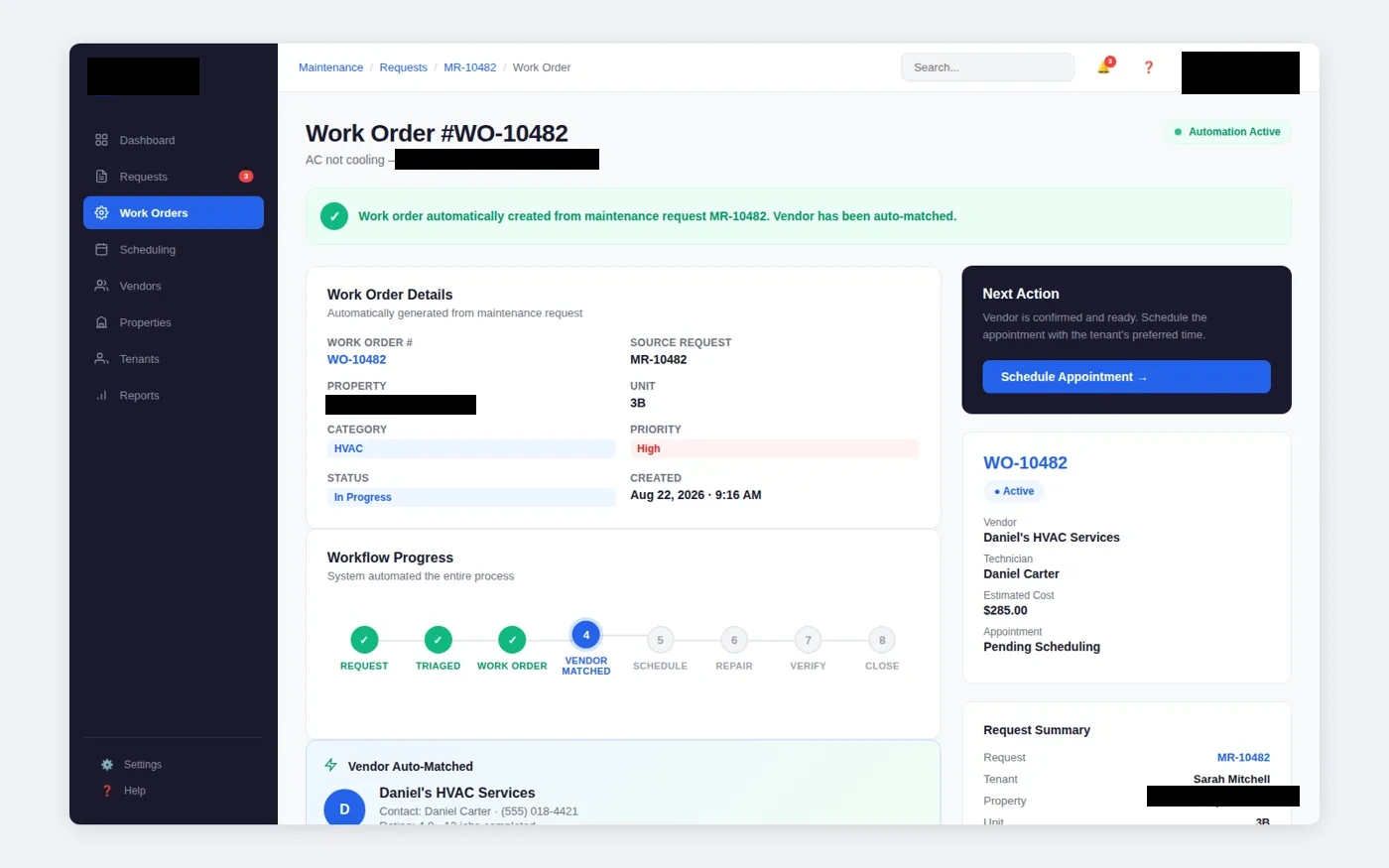
Separate operational stages required the team to carry context and next actions from one step to the next.
TechForge worked around the actual operational workflow rather than forcing the business into a generic software structure.
Software should support the way the business operates. When normal work depends on spreadsheets, side processes, manual fixes and exceptions outside the system, the fit may no longer be right.
The official system and the real workflow begin to separate.
People maintain spreadsheets beside the main system.
Important steps happen outside the software.
Teams use fields for purposes they were never designed for.
Staff need detailed internal knowledge just to complete normal work.
Exceptions are handled through messages or manual notes.
The business changes its process because the software cannot support it.
The underlying issue could be poor configuration, missing integration, an unnecessarily complicated workflow, the wrong product, or a genuinely unique operational requirement.
Building something new should come after understanding why the current system does not fit.
Understand the real workflow, including the workarounds.
Separate what the business needs from what the current software supports.
Question whether the workflow itself should remain unchanged.
Configure, connect, replace or build based on the actual constraint.
Problem first. Technology second.
More intervention is not automatically better.
The software can support the operation but is not being used effectively.
The missing capability exists elsewhere and systems need to work together.
The process itself is creating unnecessary complexity.
Another existing product is a better fit.
The operation has requirements standard software genuinely cannot support.
Custom software becomes reasonable only when the operational requirement justifies owning and maintaining it.

Separate operational stages required the team to carry context and next actions from one step to the next.
TechForge worked around the actual operational workflow rather than forcing the business into a generic software structure.
We can look at the operation first and determine whether the answer is better use of what you have, integration, replacement or something custom.
START A CONVERSATION