
THE SITUATION
Property and service operations were spread across different workflows, making it harder to keep maintenance requests, properties and day-to-day operations moving through one system.
The operational need was not another isolated screen. It was a clearer way to move maintenance work from the first request through coordination, scheduling and completion.
WHAT WASN'T WORKING
- 01
Requests did not move through one consistent operational view.
- 02
Property, unit, vendor and scheduling context required repeated handoffs.
- 03
Priorities and next actions were harder to read at a glance.
- 04
The state of a maintenance job depended on manual coordination and follow-up.
WHAT WE CHANGED
We worked around the actual operational workflow rather than forcing the business into a generic software structure — bringing the core processes into a unified property and service management system.
Separate operational stages that required the team to carry context and next actions from one step to the next.
A connected maintenance workflow linking request intake, priority, property and unit context, work orders, assignment, scheduling, status and closure.
EXISTING WORKFLOW / BEFORE
These screens show the earlier maintenance path and the coordination required as work moved between stages.
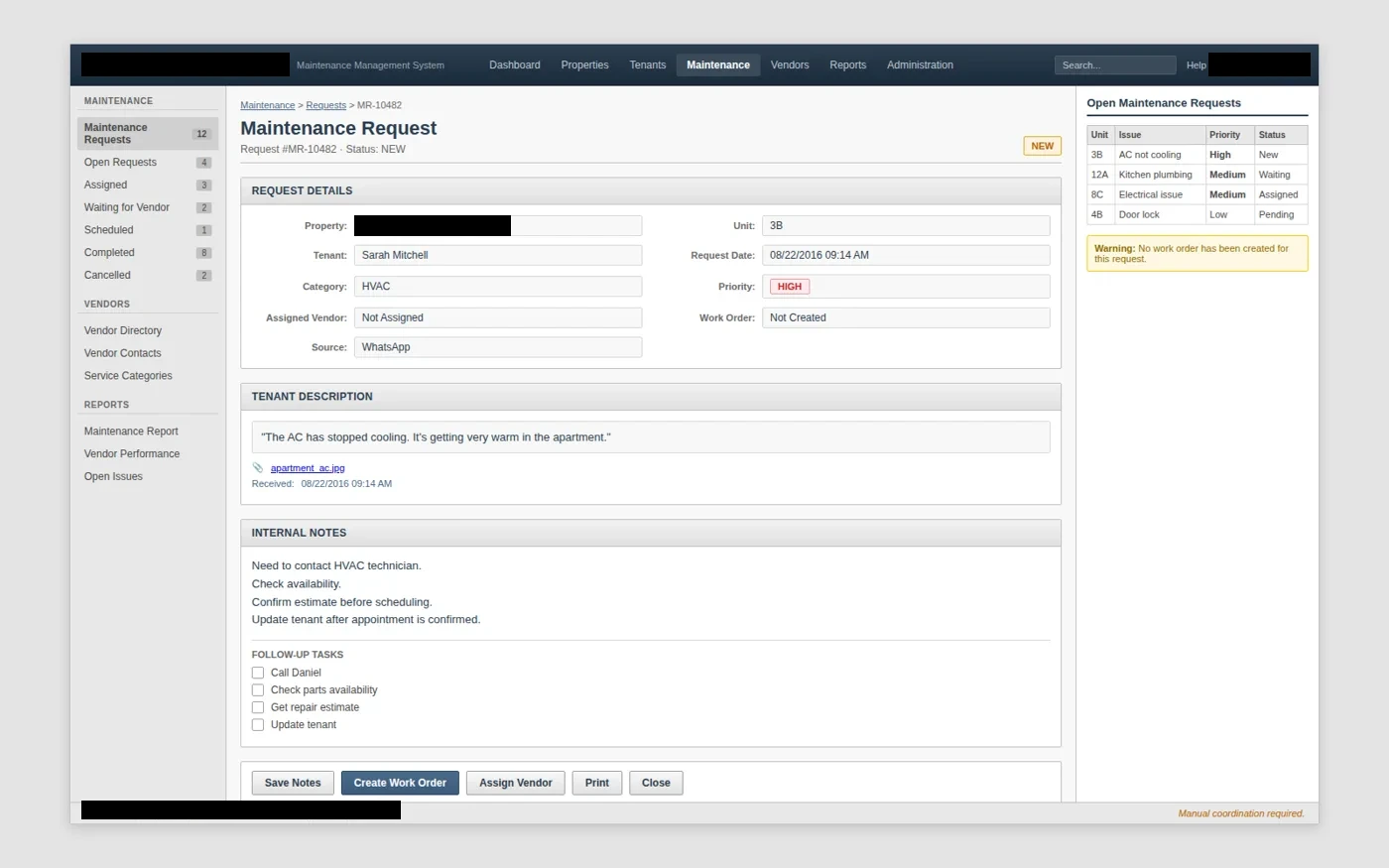
MAINTENANCE REQUEST
The request record held the issue details, but work-order creation and coordination remained separate next steps.
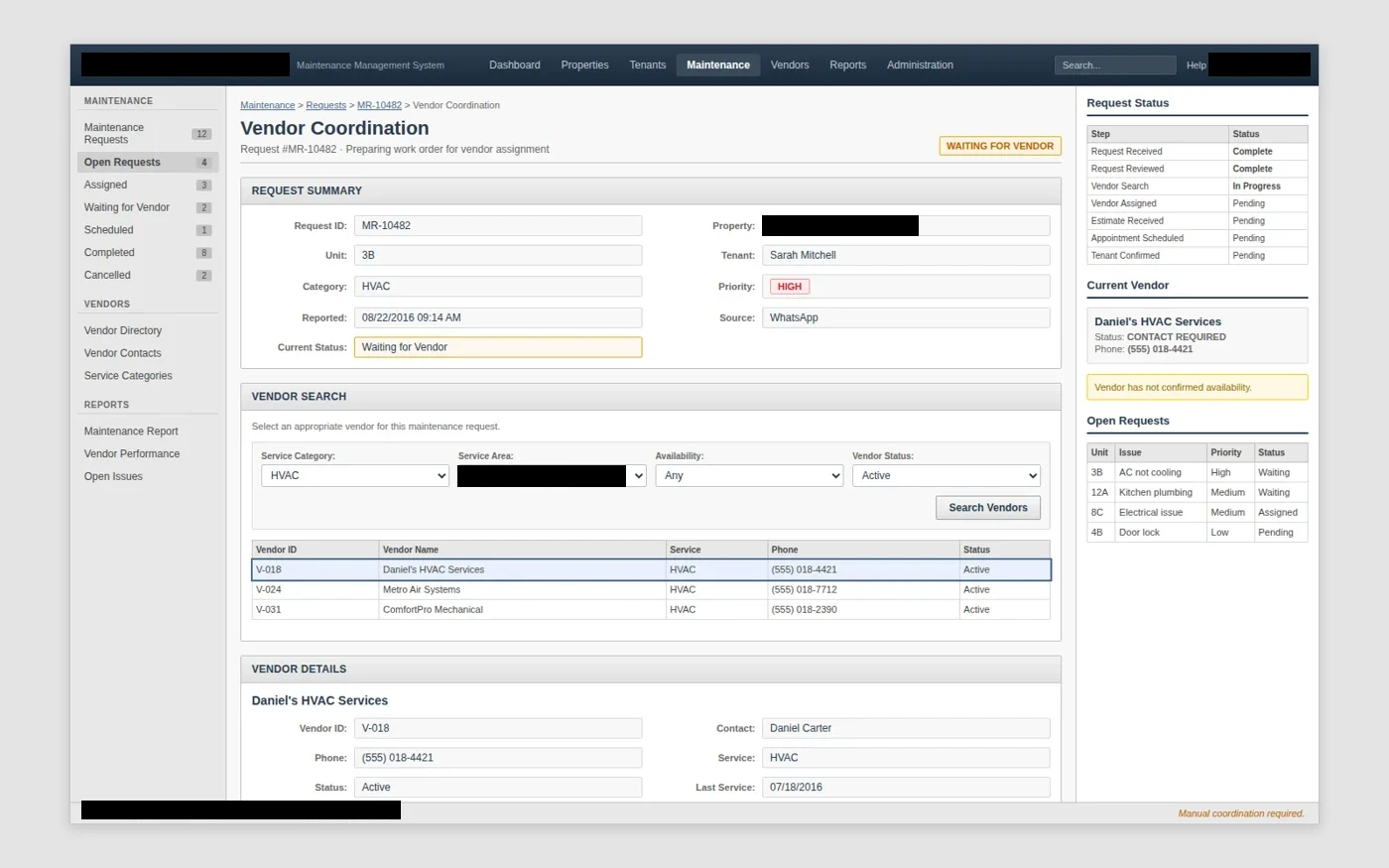
VENDOR COORDINATION
Vendor search, availability and assignment depended on a manual coordination stage.
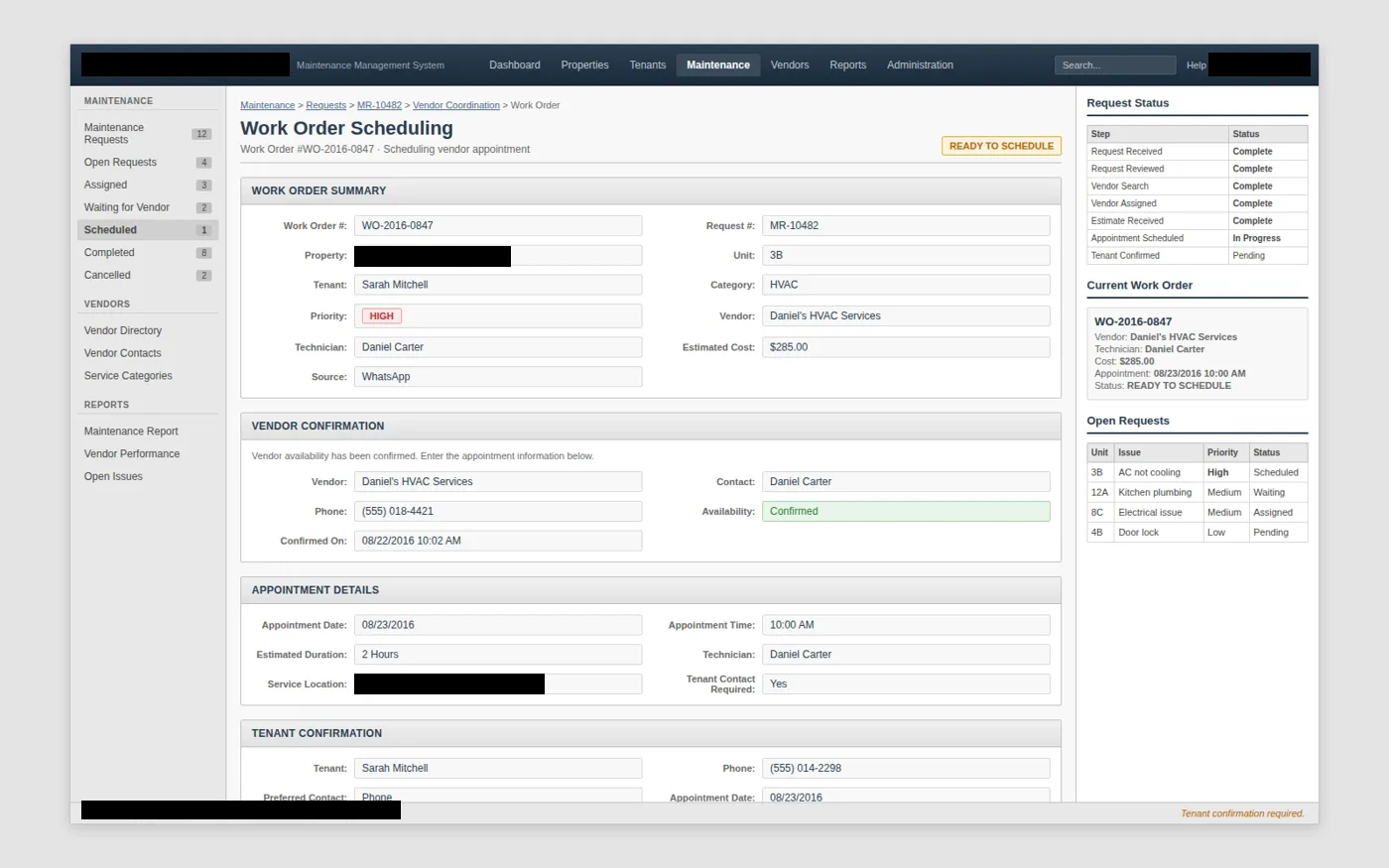
WORK ORDER SCHEDULING
Scheduling brought together the request, vendor and appointment details across a dense operational screen.
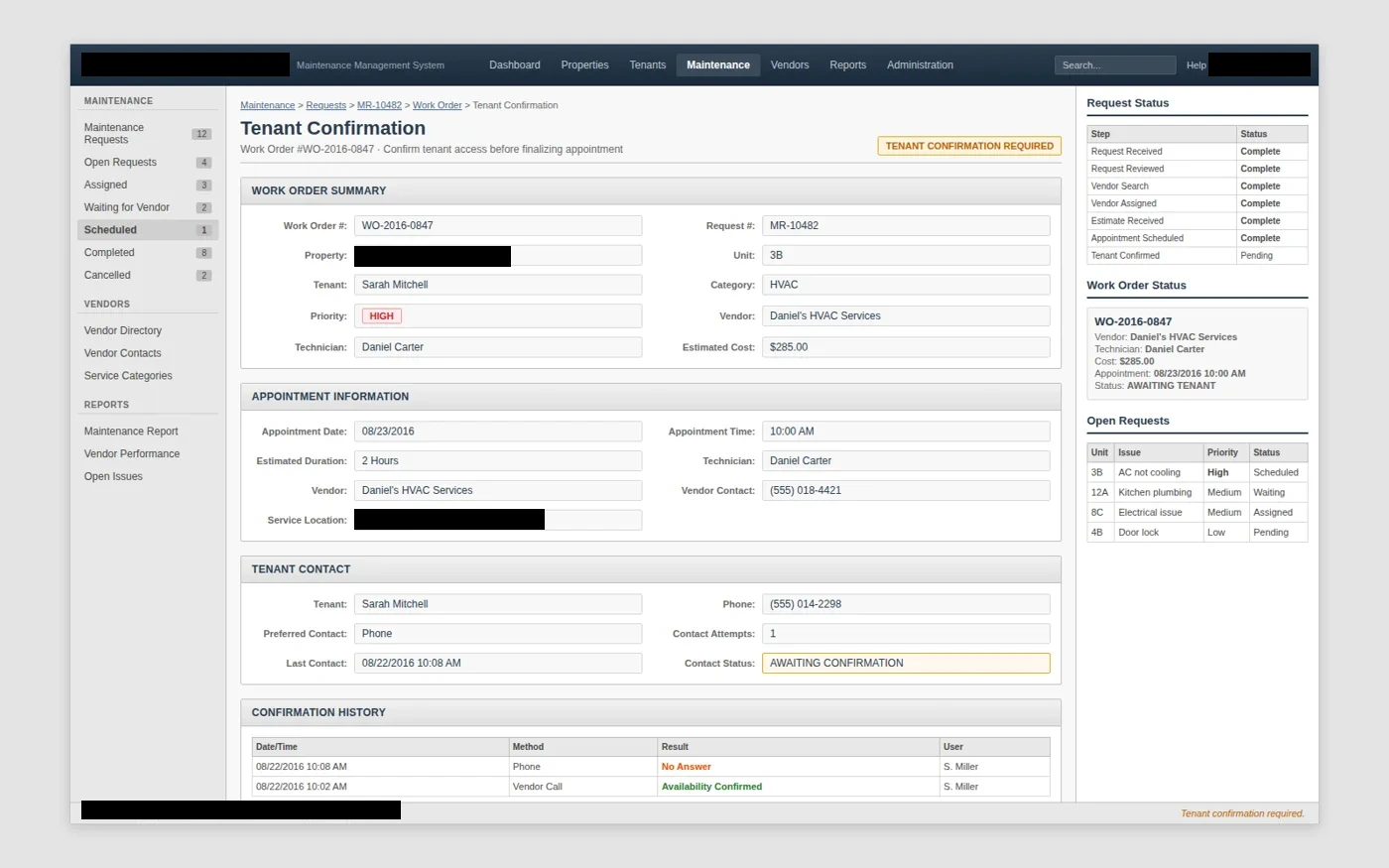
TENANT CONFIRMATION
Tenant access and confirmation introduced another follow-up point before work could progress.
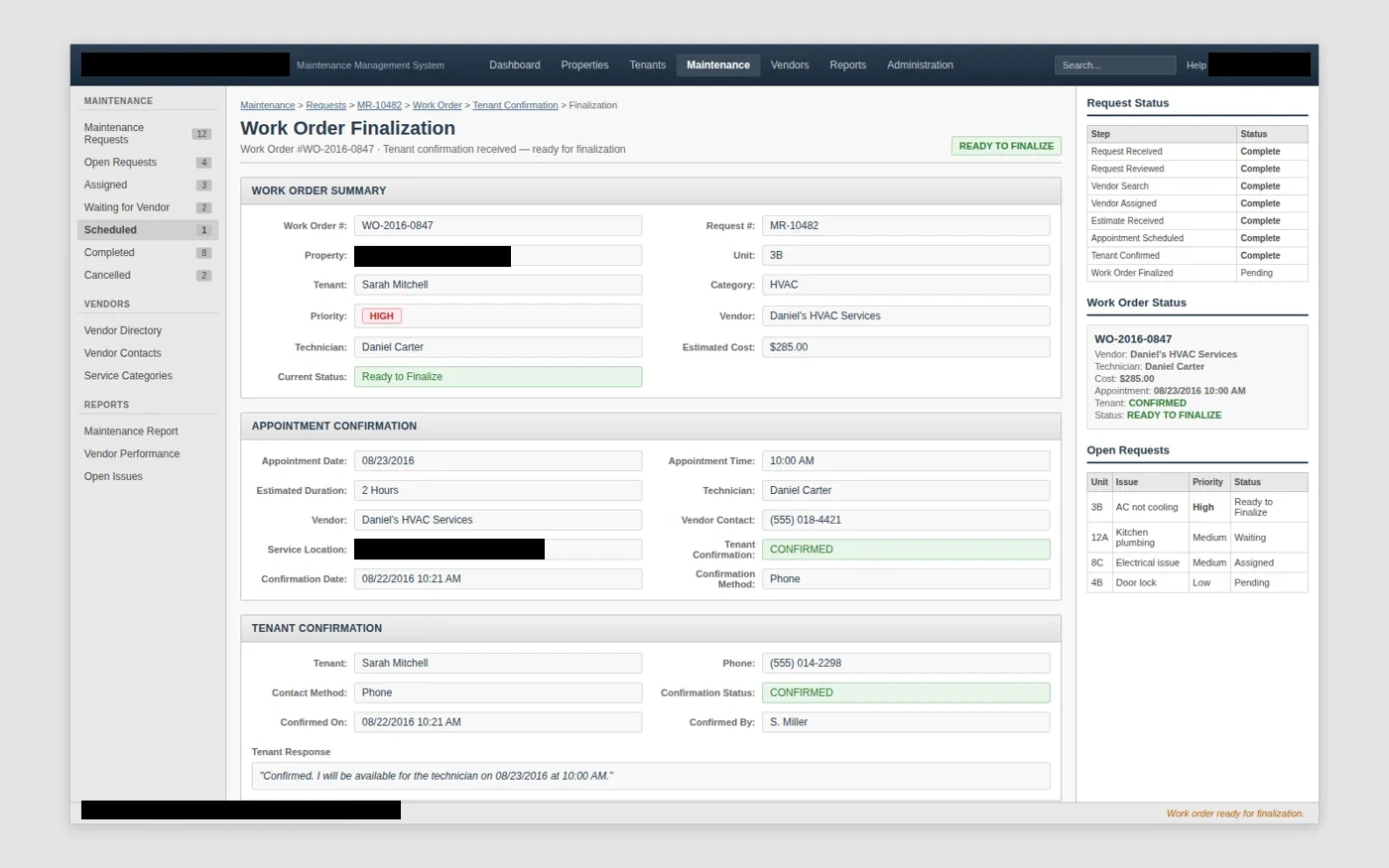
WORK ORDER FINALIZATION
Appointment and confirmation details had to be checked before the work order could be finalized.
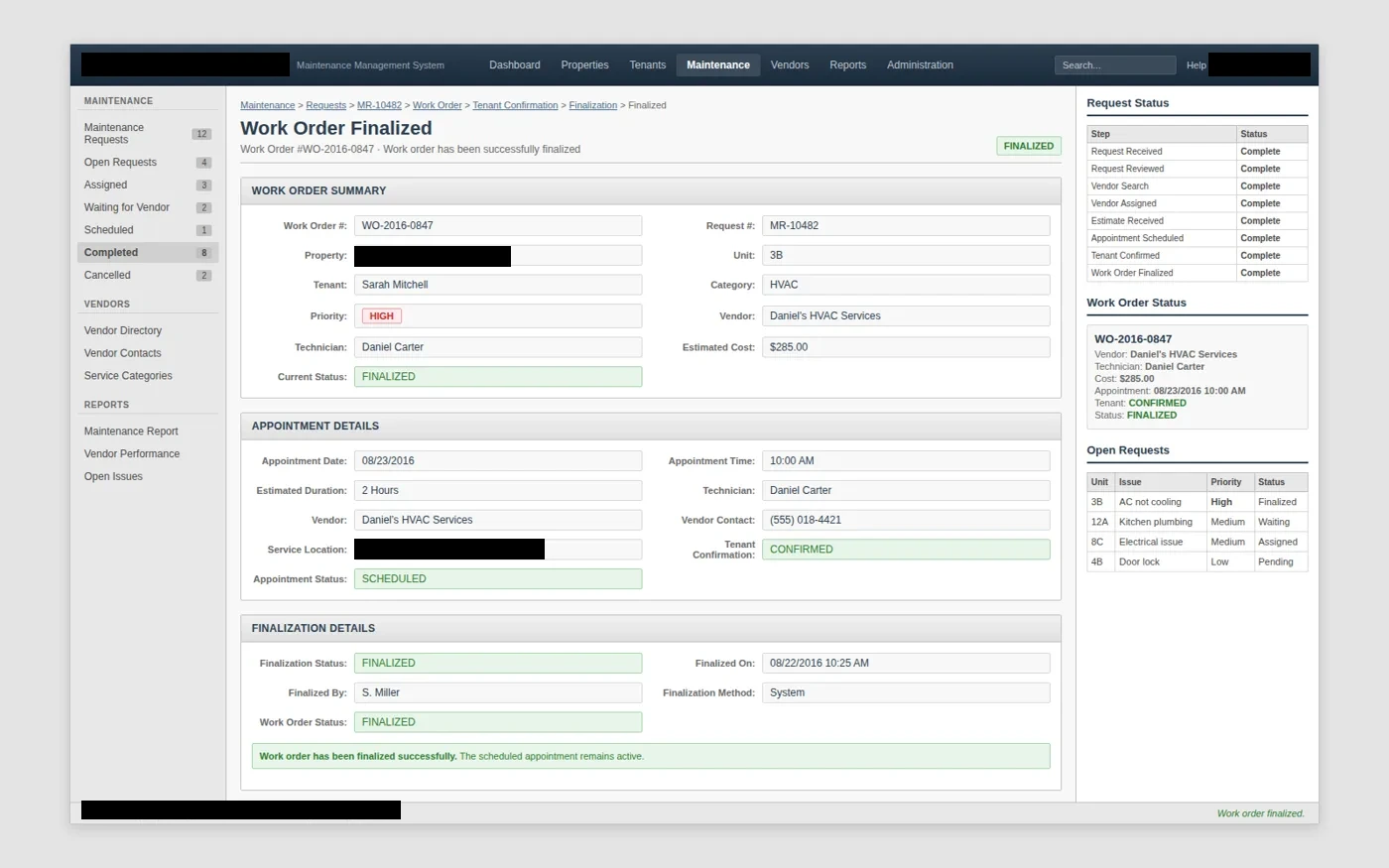
FINALIZED WORK
Completion existed as a final state, but the wider maintenance lifecycle remained difficult to scan as one connected flow.
The goal wasn't to reproduce the old software.
It was to remove the operational friction around it.
THE SYSTEM DELIVERED
The new interface makes the maintenance lifecycle visible—from the shared request queue to resolution and closure.
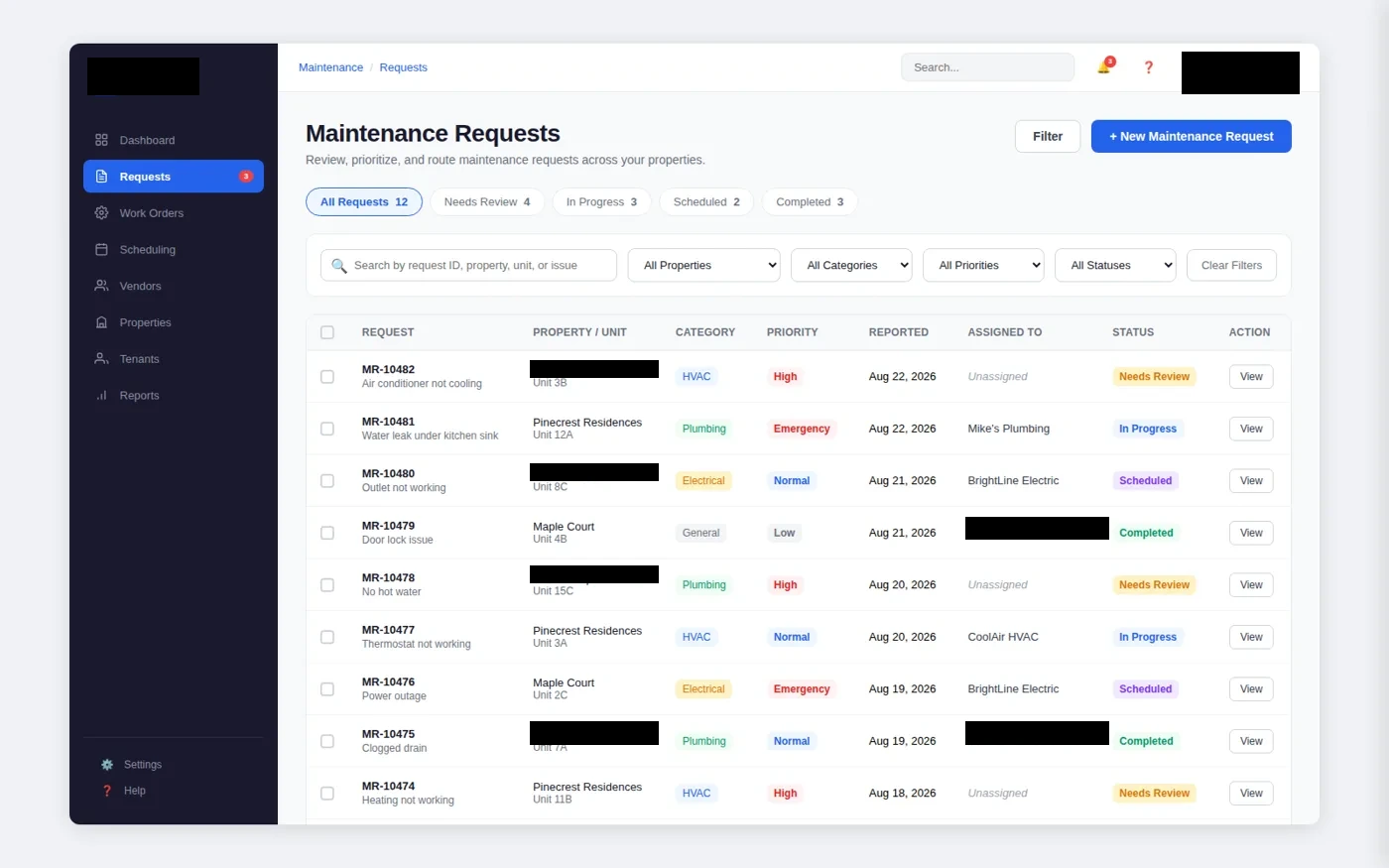
MAINTENANCE REQUESTS
Centralized request visibility with filters for property, category, priority and status.
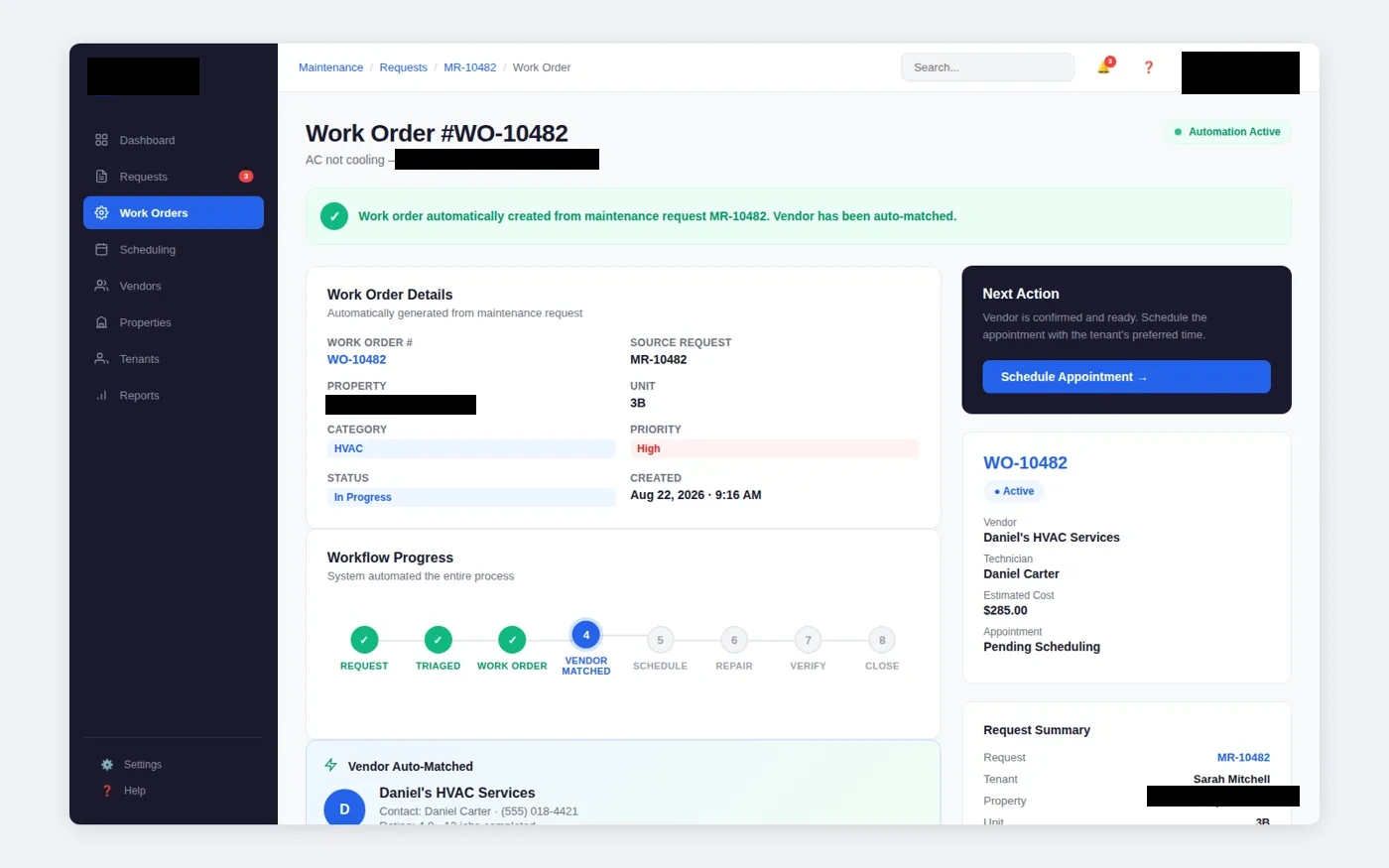
WORK ORDER DETAIL
Request context, assignment, current status and the next operational action in one place.
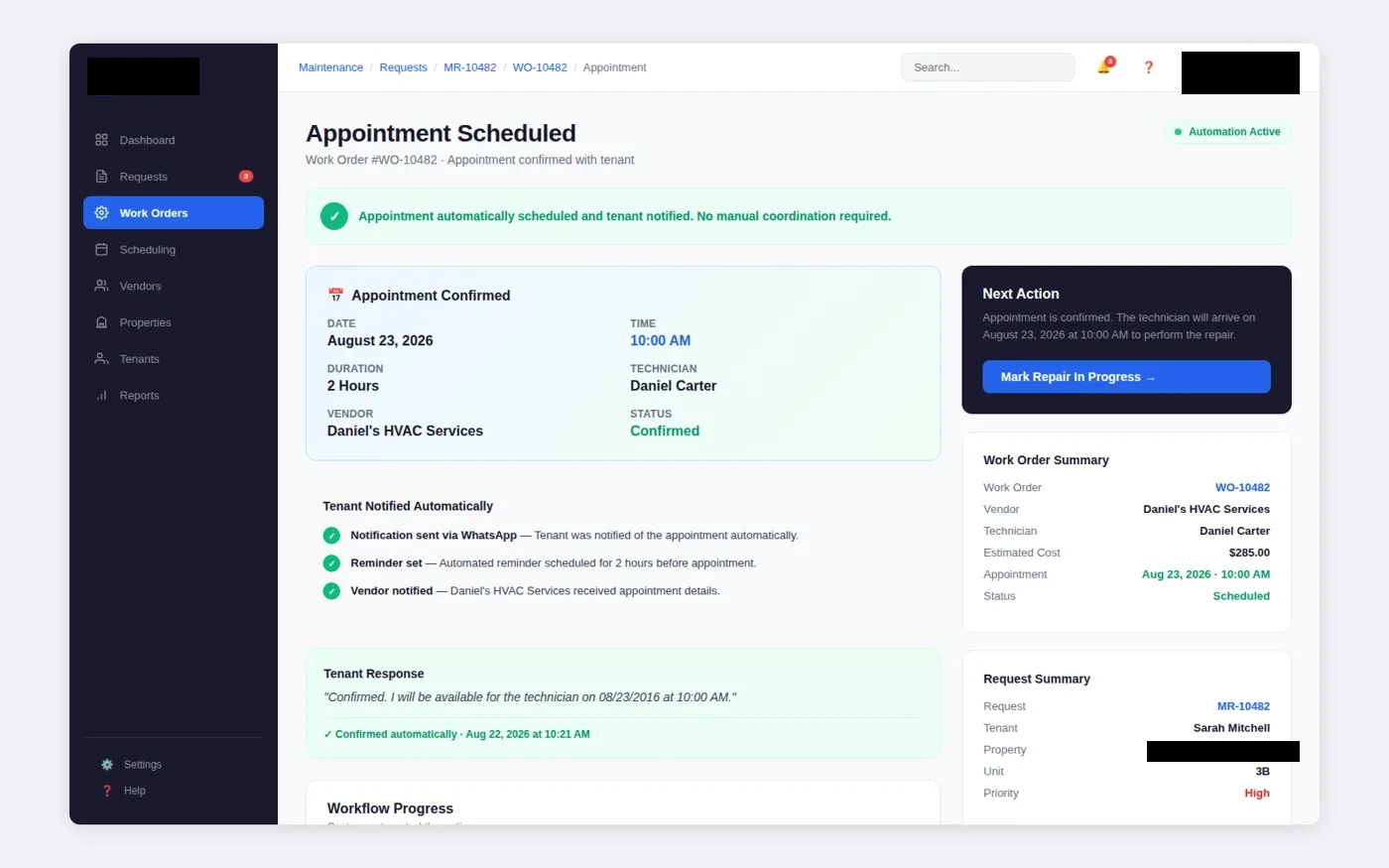
SCHEDULED WORK
Appointment details, notifications and workflow progress kept together through scheduling.
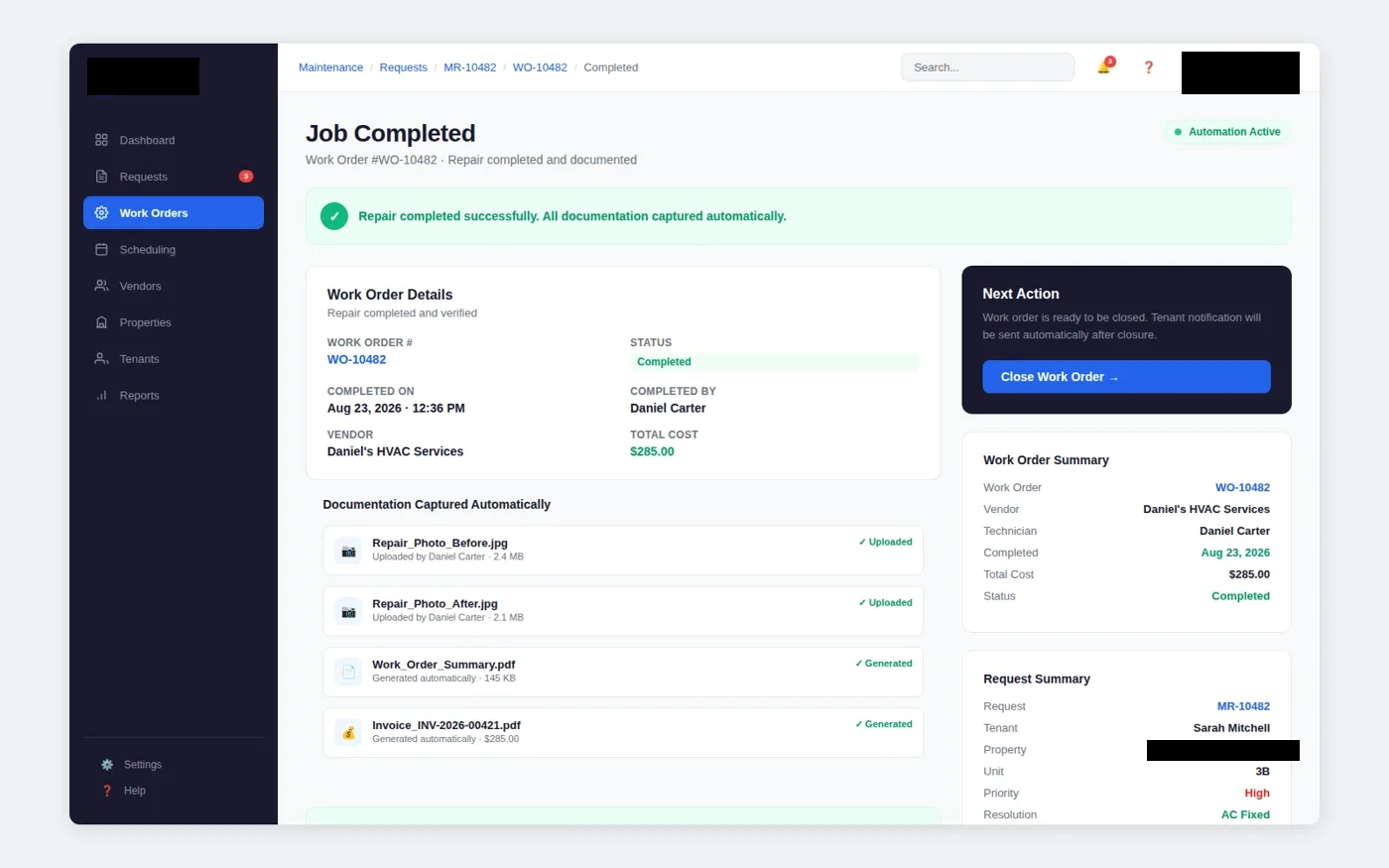
COMPLETED WORK
Completion status and supporting documentation captured against the work order.
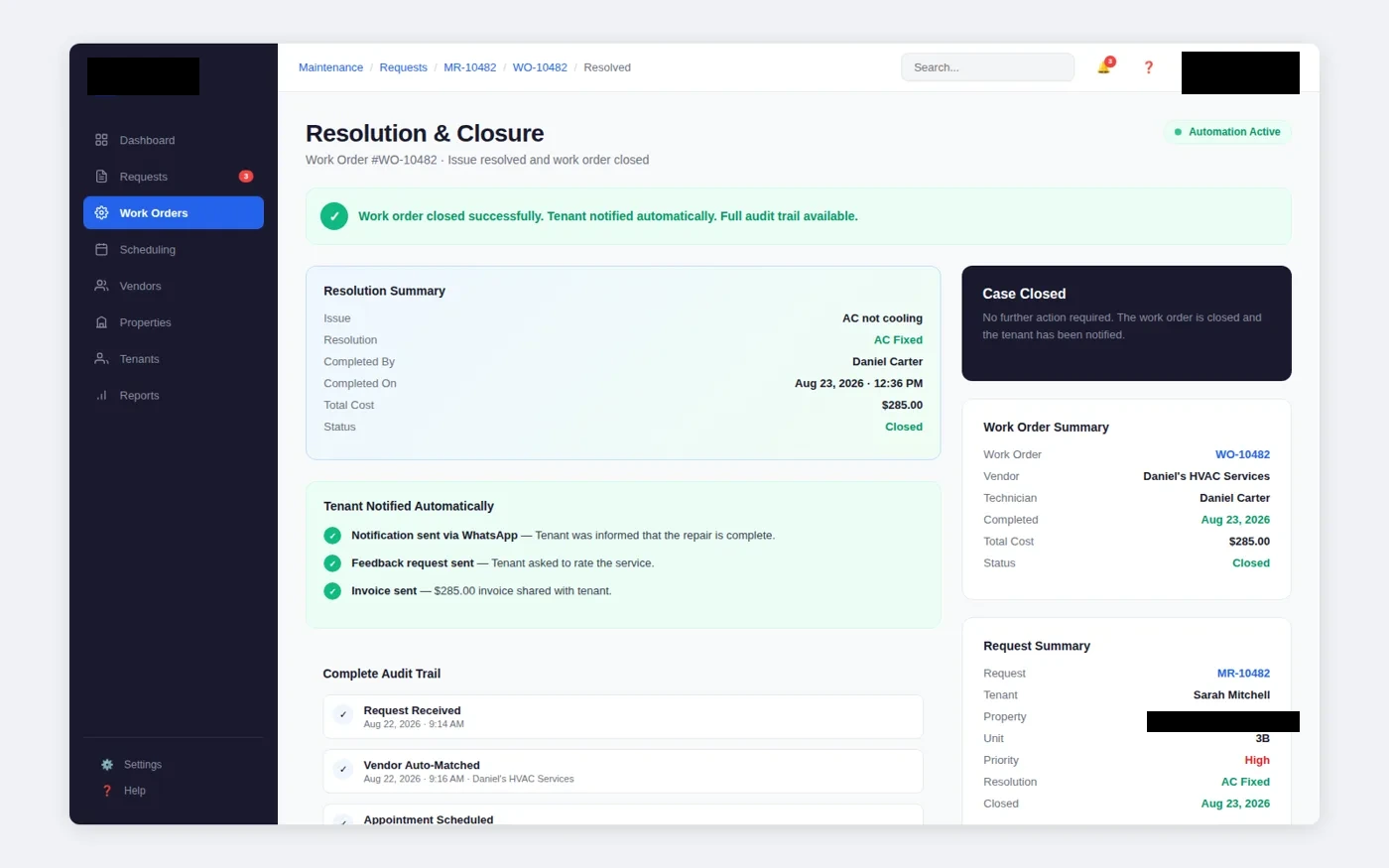
RESOLUTION & CLOSURE
A clear closing state with resolution context and a visible maintenance audit trail.
WHAT THE SYSTEM NOW HANDLES
- REQUEST INTAKE
- A shared queue for incoming maintenance needs.
- PRIORITIZATION
- Category and priority visible where decisions are made.
- WORK ORDERS
- Requests carried into structured operational work.
- ASSIGNMENT
- Vendor and technician context connected to each job.
- STATUS VISIBILITY
- A readable state and next action throughout the workflow.
- PROPERTY / UNIT CONTEXT
- Location details remain attached to the request.
- MAINTENANCE HISTORY
- Completion and resolution retained as an audit trail.
- OPERATIONAL TRACKING
- Scheduling, progress and closure viewed as one lifecycle.
THE OPERATIONAL RESULT
A central system for managing the operational side of the business, giving the team a clearer way to manage requests, properties and ongoing work.
The team can now understand the state of maintenance work in one place, prioritize what needs attention, and carry the right operational context through each handoff.