
THE SITUATION
A marketplace platform needed to bring businesses, subscriptions, orders, communities, jobs and transactions into one connected ecosystem.
The business needed its marketplace operations to work as one connected platform, rather than requiring status to be reconstructed across separate manual workflows.
WHAT WASN'T WORKING
- 01
Operational reporting was manually compiled from separate sources.
- 02
Order status depended on phone calls, emails and spreadsheet updates.
- 03
Inventory changes were not synchronized across the operating workflow.
- 04
Vendor and payment coordination lacked one current, connected status view.
WHAT WE CHANGED
We worked through the platform's business logic and restructured key workflows around how the marketplace would actually operate — including onboarding, subscriptions, orders and transaction flows.
Manually maintained dashboards, spreadsheets, calls and email logs across orders, inventory, payments and vendor coordination.
A connected marketplace operating system bringing order tracking, inventory visibility, payment status, vendor management and workflow closure into one platform.
EXISTING WORKFLOW / BEFORE
These screens show the earlier marketplace operations and the manual reconciliation required across each area.
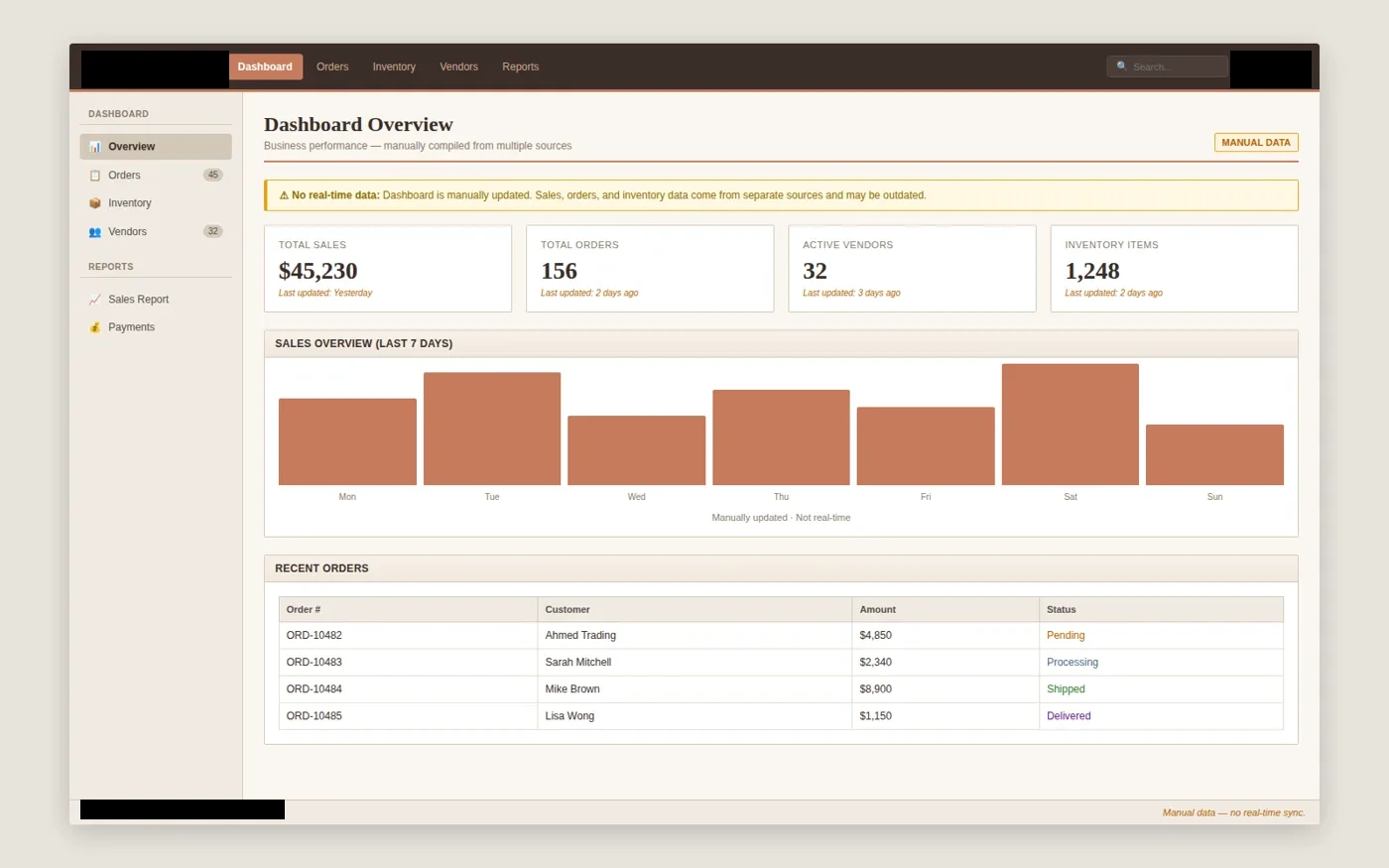
MANUAL DASHBOARD
Sales, orders, vendors and inventory were assembled into a dashboard from separate, manually updated sources.
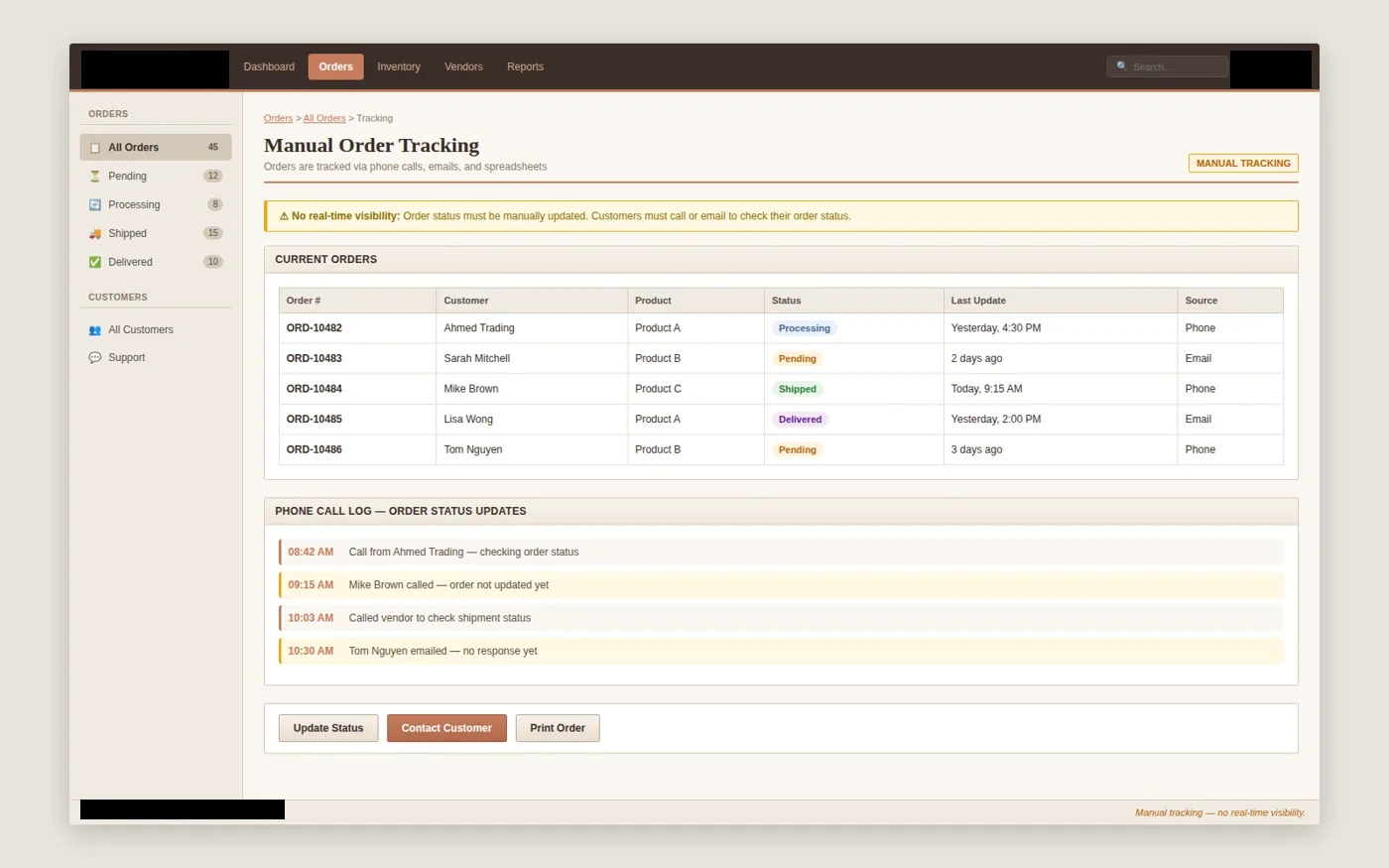
ORDER TRACKING
Order status updates moved through calls, emails and spreadsheets instead of one live workflow.
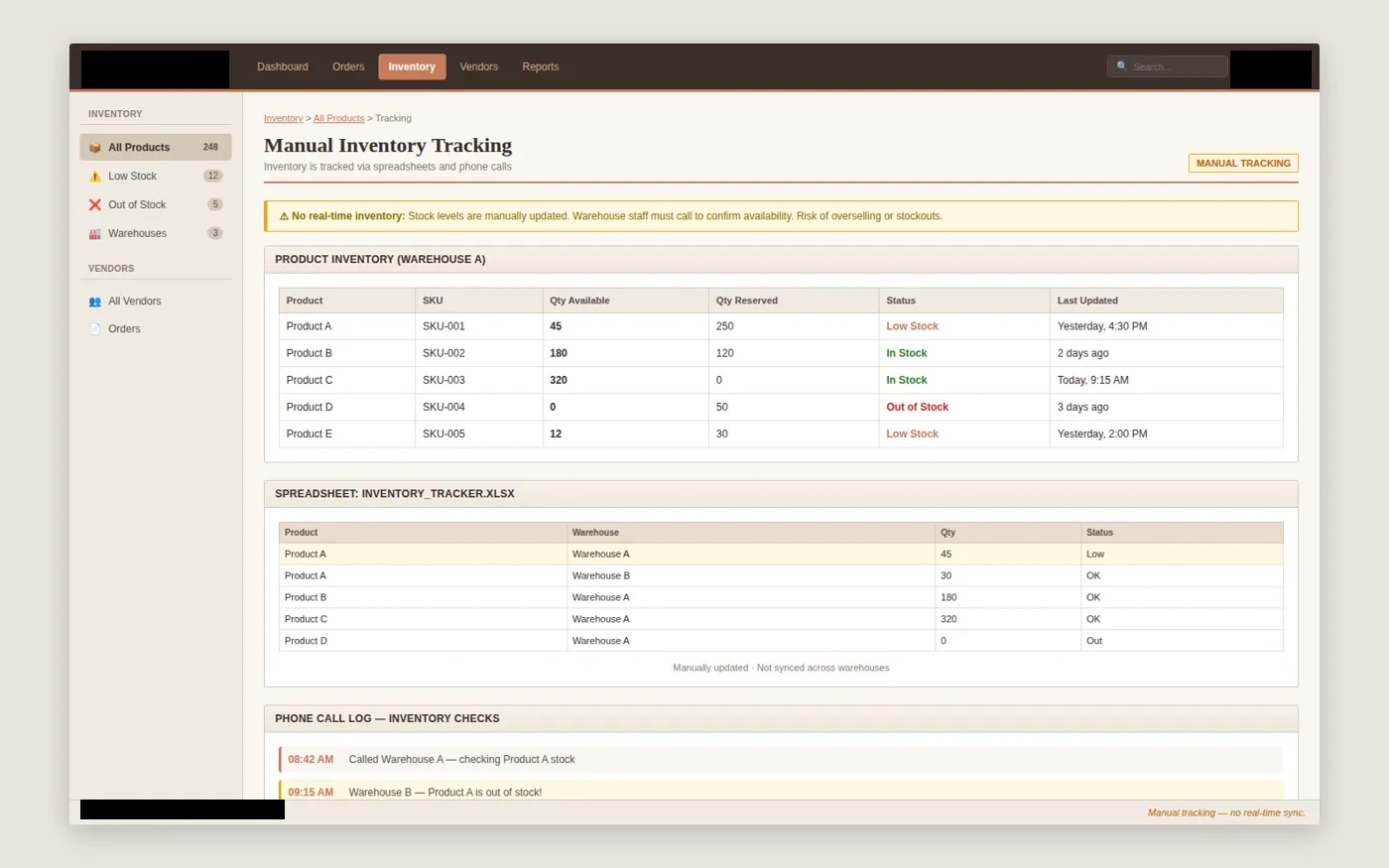
INVENTORY TRACKING
Stock levels required manual checks and spreadsheet updates across warehouses.
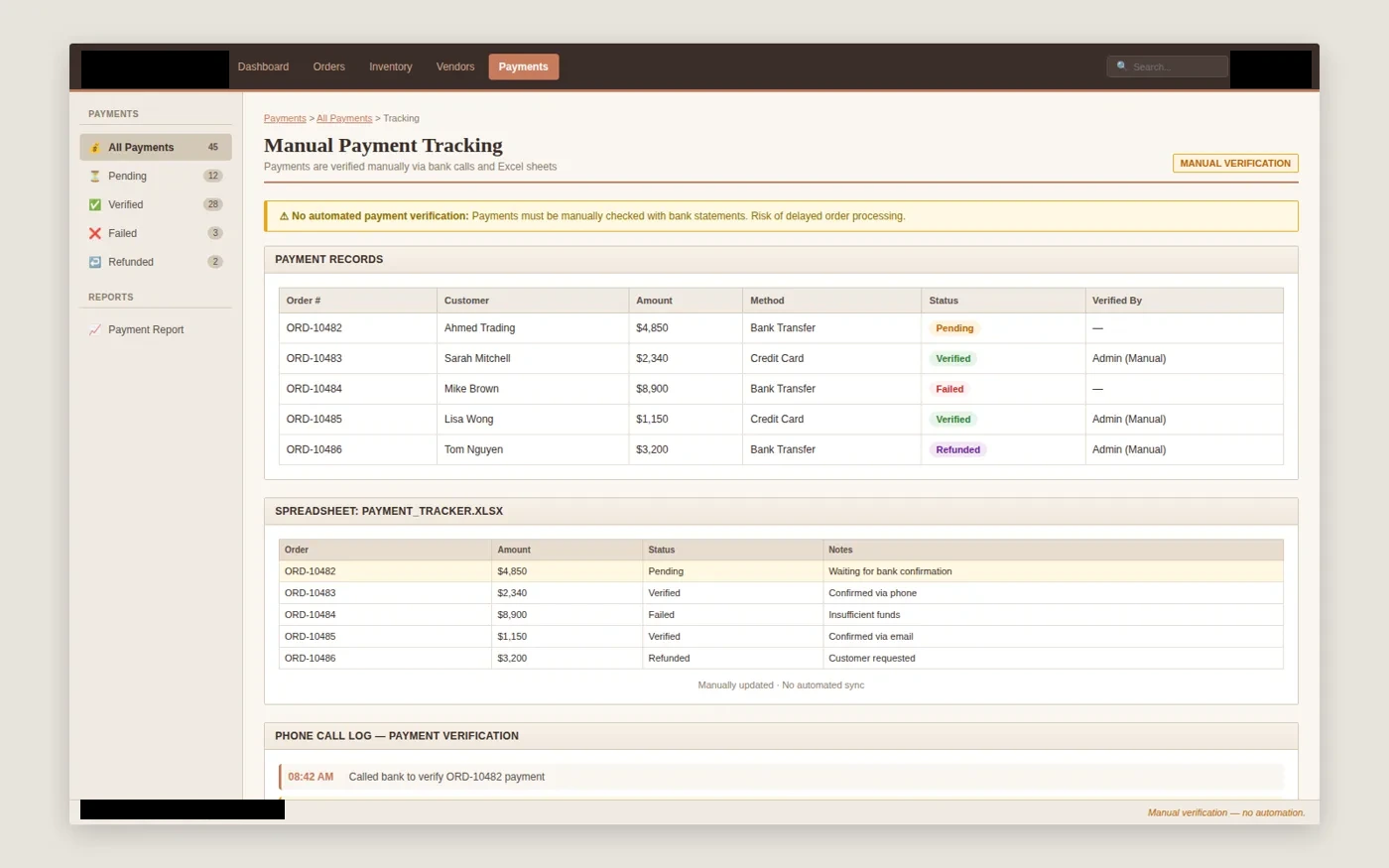
PAYMENT VERIFICATION
Payments were checked against bank records and updated manually before orders could move forward.
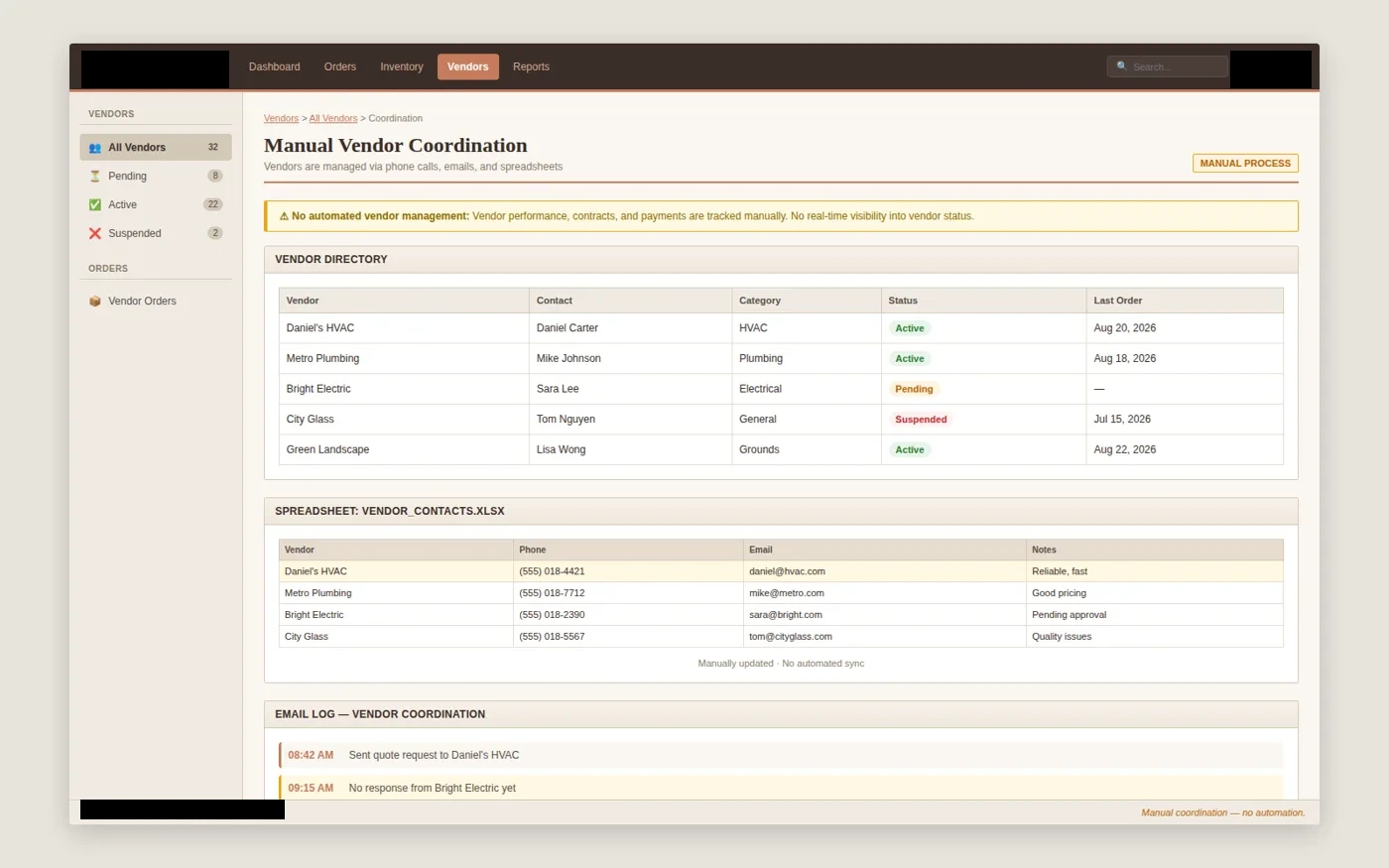
VENDOR COORDINATION
Vendor contacts, status and follow-up were maintained across spreadsheets, calls and email logs.
The shift wasn't a new dashboard over the same process.
It was connecting the marketplace operations behind it.
THE SYSTEM DELIVERED
The delivered platform connects the operational views that move an order from activity and inventory through payment, vendor coordination and closure.
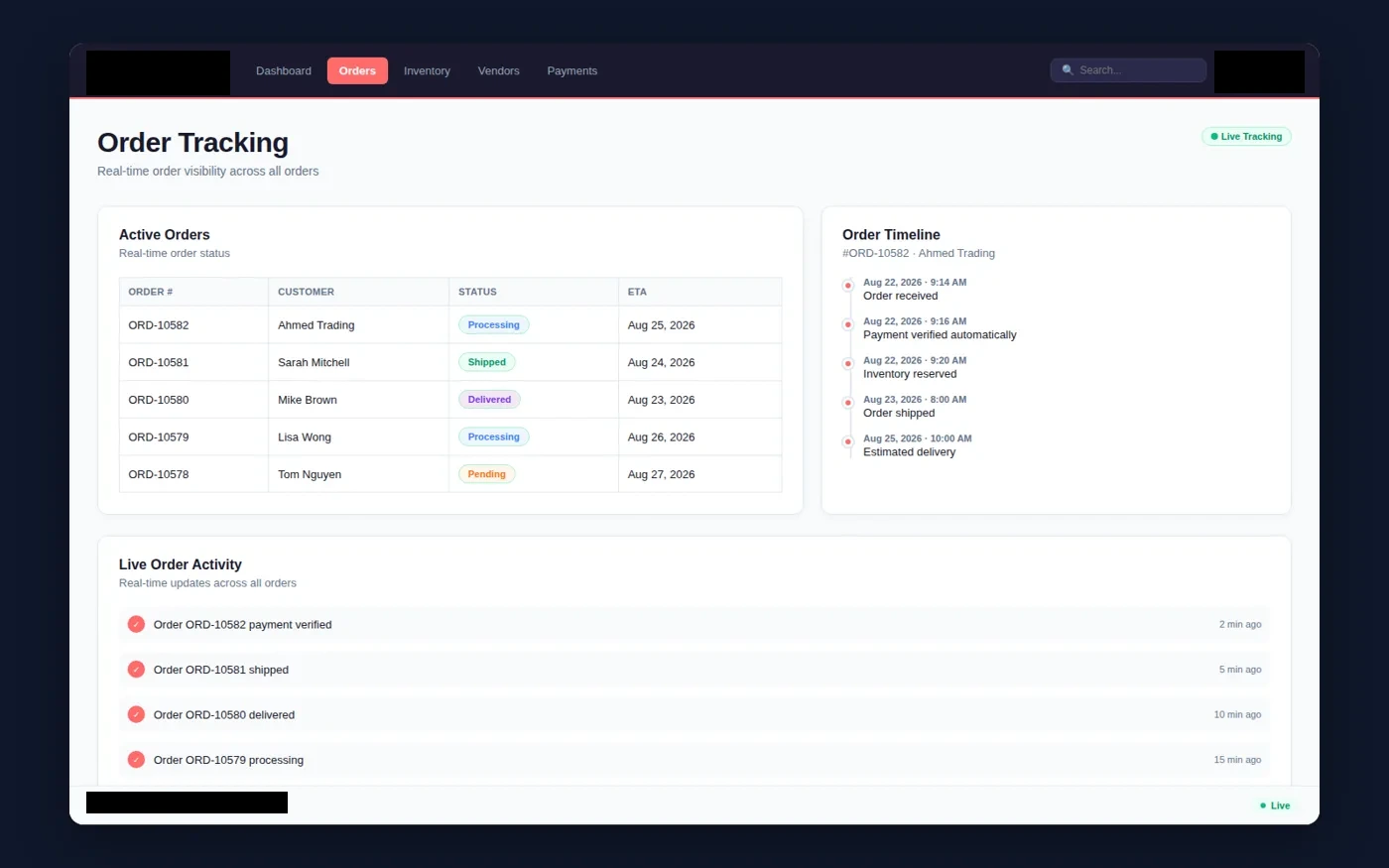
ORDER TRACKING
A live order view connects current status, delivery timing, timeline events and operational activity.
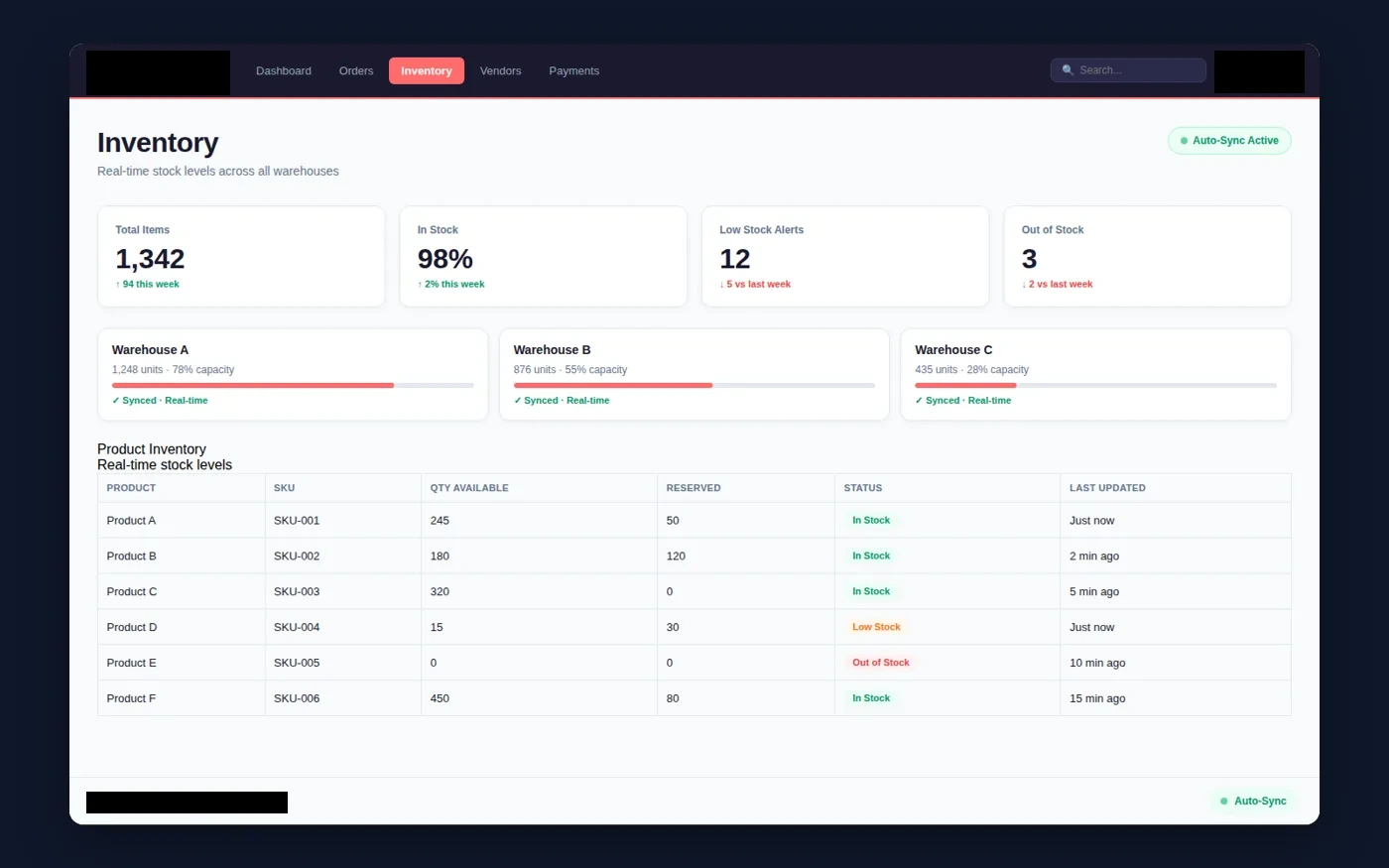
INVENTORY
Shared stock visibility shows availability, reserved quantities and warehouse context as part of platform operations.
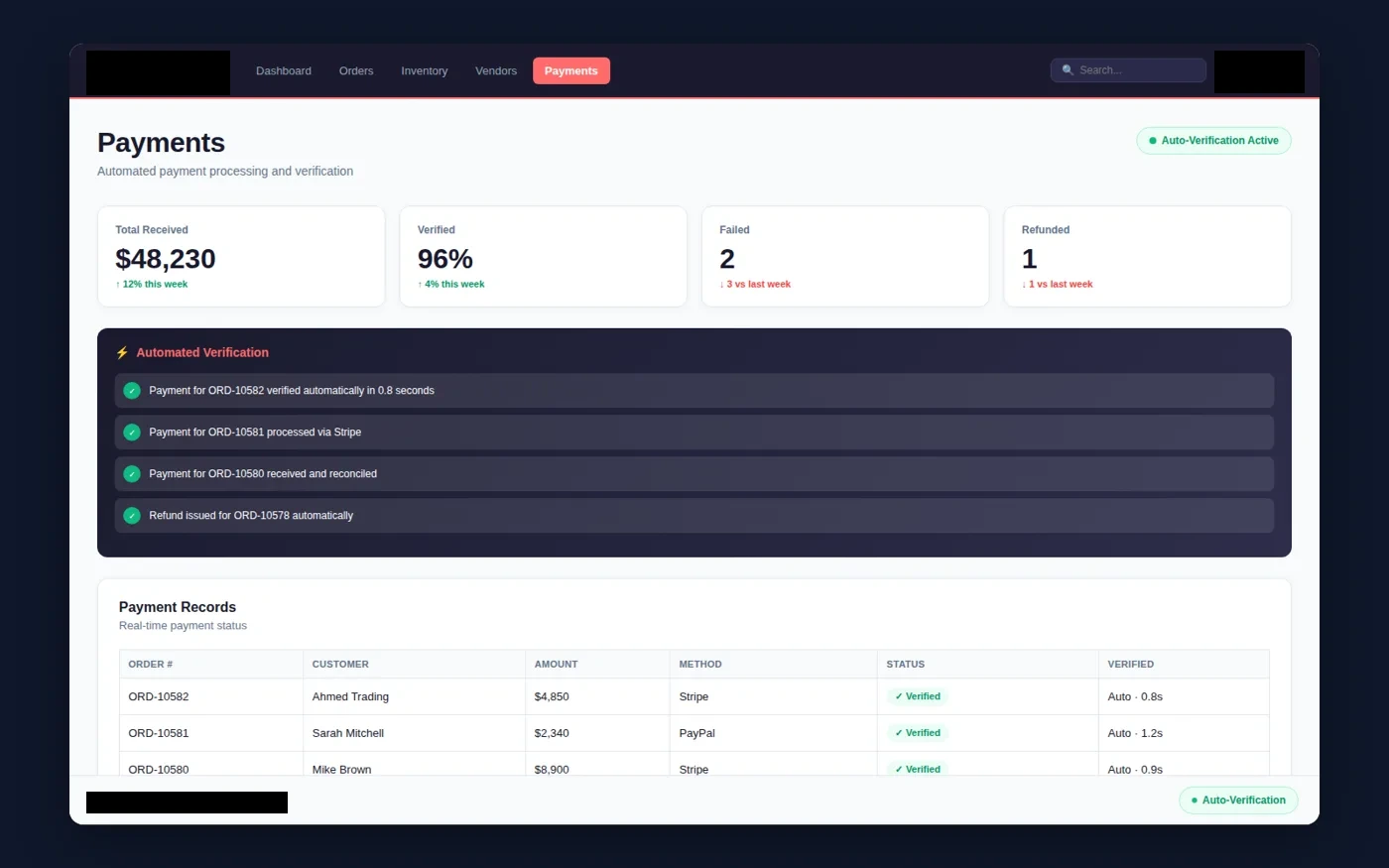
PAYMENTS
Payment processing, verification and refund status are connected back to the relevant orders.
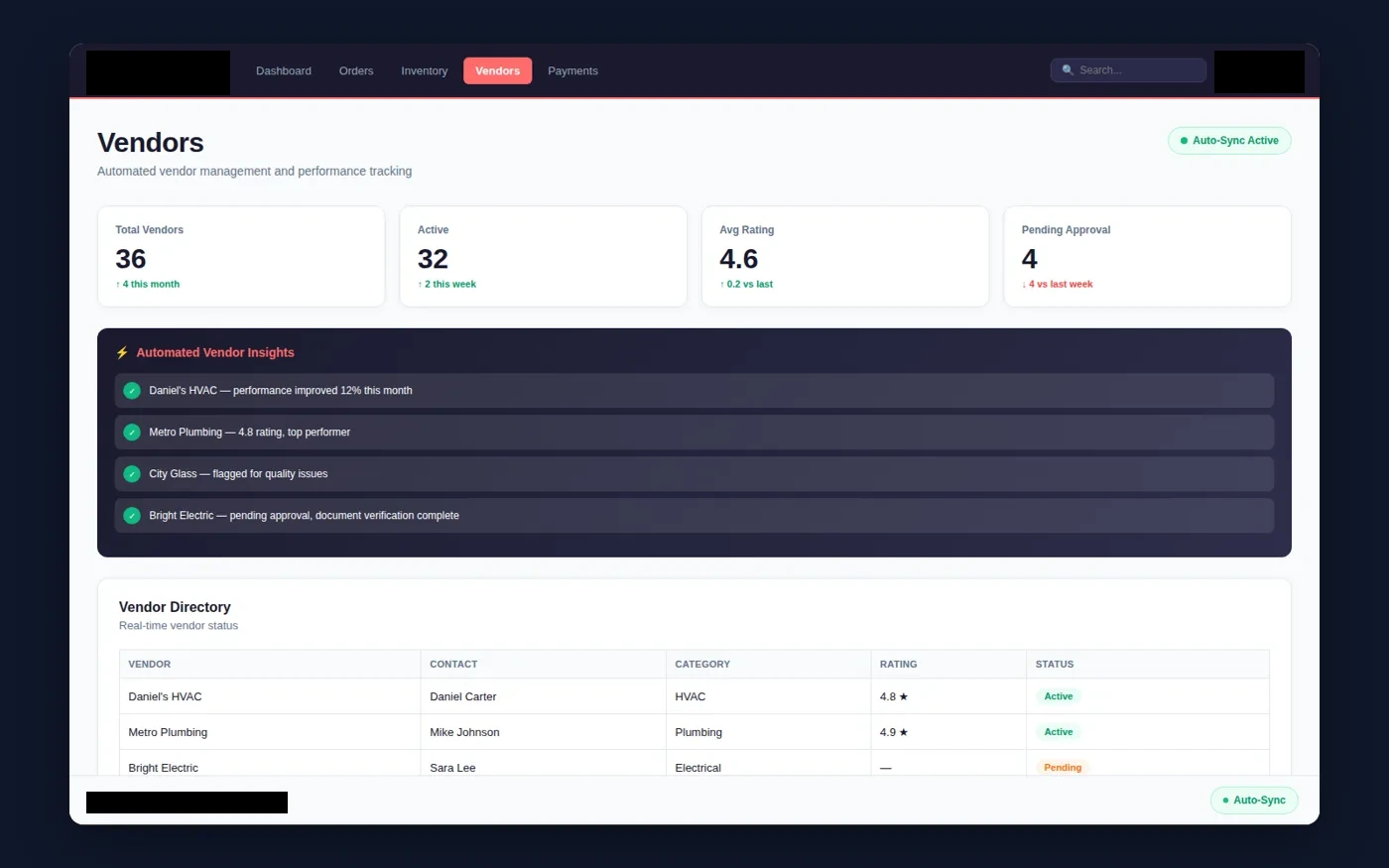
VENDORS
Vendor status, category and performance context can be reviewed from one operational directory.
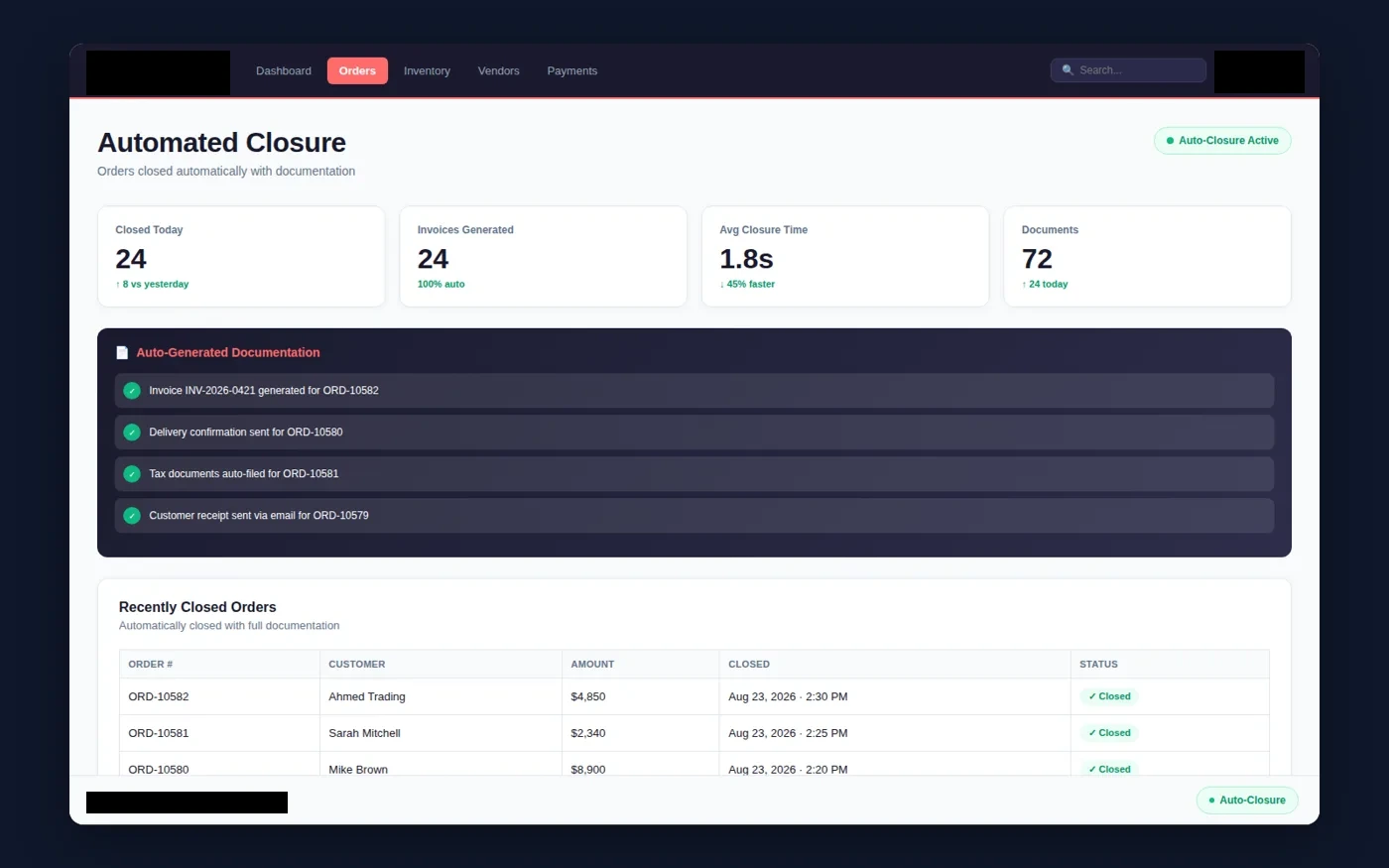
ORDER CLOSURE
Closed orders retain their status and associated documentation as the final step in the workflow.
WHAT THE SYSTEM NOW HANDLES
- ORDER TRACKING
- Current order status, timeline and activity in one view.
- INVENTORY VISIBILITY
- Available and reserved stock connected across warehouses.
- PAYMENT STATUS
- Processing, verification and refund state linked to orders.
- VENDOR MANAGEMENT
- Vendor category, status and performance context together.
- LIVE ACTIVITY
- Operational updates visible as work moves through the platform.
- WORKFLOW STATUS
- Clear stages from active order through delivery and closure.
- PLATFORM OPERATIONS
- Orders, inventory, payments and vendors managed as one system.
- ORDER CLOSURE
- Completed orders retained with supporting documentation.
THE OPERATIONAL RESULT
A unified marketplace platform designed around the business model rather than a collection of disconnected features.
The team can follow orders, inventory, payments and vendor activity through one connected operating view, with clearer status across the marketplace workflow.